
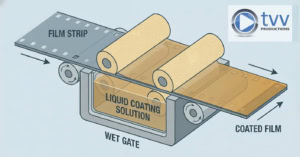
 So what is Wet Gate scanning?

A a premium film-transfer process that uses a special liquid with a refractive index close to the film base. As the film passes through this liquid during scanning, the fluid fills in scratches, scuffs, and other surface imperfections, making them far less visible in the final image.
Why Wet Gate Is a Better Way to Scan Film
Reduces Scratches and Surface Damage
The wet gate fluid optically hides common defects—vertical projector scratches, abrasions, and light emulsion wear—resulting in a cleaner, more stable image right from the scan.
Cleaner, Sharper Results
By reducing light scatter caused by scratches and pits, wet gate scanning captures more real detail, better contrast, and a smoother grain structure. The result is a noticeably sharper and more faithful reproduction of the original film.
This is an old 8mm film showing how effective it can be even on old 8mm film.
Less Digital Repair Needed
Because many physical defects are minimized during capture, the digital restoration process becomes faster, more accurate, and less intrusive. This means fewer artifacts and more of the film’s true character is preserved. There is much less need the to use digital restortion tools or a much lighter touch can be applied to repair film defects often producing better end results.

 Ideal for Archival and High-Value Footage
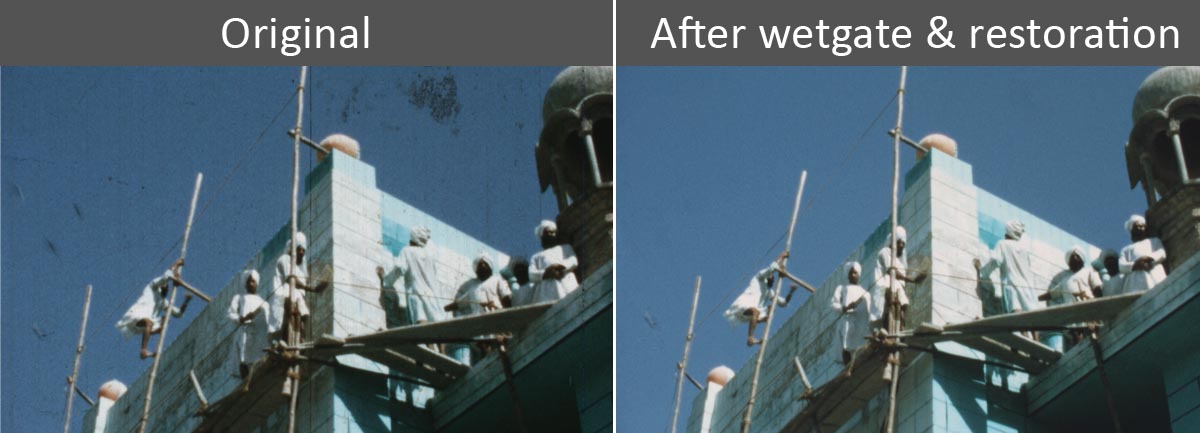
Wet gate scanning is widely used in professional archival work because it delivers the best possible image quality while treating the film gently. For damaged, rare, or historically important footage, it’s often considered essential. We recommend this on all archival films scanned.
In Short
Wet gate scanning produces a cleaner, clearer film transfer by optically concealing scratches and imperfections during the scan—delivering higher quality results and preserving more of the original image.

